By Daniel Tokaji (January 23, 2026)
Originally published via Law360.
Editor's note: Law360 welcomes opinionated commentary and debate in our Expert Analysis section. To submit op-eds or rebuttals, or to speak to an editor about submissions, please email expertanalysis@law360.com.
Over the past 13 years, the U.S. Supreme Court has denied relief for partisan gerrymandering claims,[1] effectively eliminated one key section of the Voting Rights Act,[2] and weakened another by making it more difficult to challenge burdens on voting.[3] The Supreme Court has also repeatedly overturned preelection court orders protecting the right to vote, effectively denying voters access to federal courts when it is most critical.[4]
It's therefore understandable that some might view the Jan. 14 decision in Bost v. Illinois State Board of Elections[5] as part of this pattern of diminishing protection for the right to vote.[6] After all, the Supreme Court allowed a Republican congressional candidate to proceed with his claim that mail-in ballots received after Election Day should be rejected.
More specifically, it held that the candidate's "interest in a fair process" gives him standing to challenge an Illinois law requiring that those ballots be counted, if postmarked by Election Day and received within two weeks.[7]
While it's certainly possible that Bost could lead to the wrongful rejection of absentee ballots, the Supreme Court was right to broaden standing for candidates challenging state election rules. Our election system works better when the federal courthouse doors are open to claims that state election laws and practices violate federal law.
Bost is therefore a welcome shift from other decisions that have impeded access to federal courts.
Background on Bost
Illinois is one of 14 states[8] that counts mail-in ballots received after Election Day, if they're postmarked by Election Day. U.S. Rep. Michael Bost, R-Ill., challenged Illinois' law in federal court, alleging that it conflicts with federal statutes setting congressional[9] and presidential[10] general elections for the Tuesday after the first Monday in November.
The question before the Supreme Court at this stage was not whether Illinois' law conflicts with federal law, but only whether Bost has standing to make this claim in federal court.
Bost asserted his interest as a candidate in having his election conducted in compliance with federal law.
He also claimed that the counting of ballots received after Election Day would cost his campaign time and money. In 2024, the U.S. Court of Appeals for the Fifth Circuit issued a decision[11] in Republican National Committee v. Wetzel concluding that a similar law in Mississippi conflicts with the federal Election Day statutes — but again, the merits were not at least not yet) before the Supreme Court in Bost.
The U.S. Court of Appeals for Seventh Circuit concluded[12] that Bost lacked the "injury in fact" required for standing in federal court. As the Supreme Court held in its 1992 decision Lujan v. Defenders of Wildlife decision, standing requires that plaintiff have a "concrete and particularized" injury.[13]
Although no such requirement appears in the text of the Constitution, the court has long read it into Article III, which limits the federal courts' jurisdiction to "cases" and "controversies." The Seventh Circuit found Bost's claimed injuries too speculative to satisfy Article III's injury in fact requirement.
The Bost Opinions
The Supreme Court reversed, concluding that Bost has standing to challenge Illinois' vote-counting law. Seven of the nine justices agreed on the result, though only five joined Chief Justice John Roberts' majority opinion. The opinion breaks important new ground, in articulating a surprisingly generous rule of standing for candidates who seek to challenge election rules.
For one thing, the majority opinion almost completely omits the "injury in fact" requirement that's long been a requirement for Article III standing. It mentions that requirement only in a single footnote dismissing one of the state's arguments. While Bost doesn't overrule the long line of cases demanding an "injury in fact," it deemphasizes this established standing requirement.
Even more significant, the majority broadly defines the interests that suffice to give a candidate standing. The Supreme Court notes various ways in which election rules might harm candidates — for example, by reducing their chances of winning, by cutting their share of votes, by forcing them to expend resources, or by damaging their reputations.
It's notable that the majority says that none of these harms are required for a candidate to have standing. That's because candidates have an interest in "a fair process and an accurate result." And that interest is implicated if the process is conducted in a way that jeopardizes the fairness or accuracy of an election.
The candidate's interest, moreover, is distinctive — it's not one equally shared with the public or electorate at large. In the language of standing doctrine, the candidate's interest is "particularized" rather than "generalized."
The Bost majority is right to conclude that candidates should have standing to challenge election rules that deprive them of a fair process and accurate result. While voters also have an interest in fair elections, it's hard to dispute that candidates have an especially strong interest in the integrity of the process.
For that reason, the Bost majority properly rejected the argument that candidates should be required to demonstrate monetary harm. In some of its prior standing cases, the Supreme Court has tended to elevate financial harms like the loss of federal funding,[14] while diminishing nonpecuniary interests like the stigmatic harm resulting from race discrimination.[15]
Justice Amy Coney Barrett's concurring opinion — joined by Justice Elena Kagan — would have allowed Bost standing on the narrower ground that he'd shown an injury to his pocketbook. The problem with that line of reasoning is that it diminishes the significance of injuries that can't be measured in dollars and cents.
A candidate's interest in the fairness of the electoral process is no less real, even if it doesn't cost their campaign any money.
Justice Ketanji Brown Jackson's dissent — joined by Justice Sonia Sotomayor — concluded that Bost lacked standing under the conventional "injury in fact" standard. The dissent is correct that the majority opinion's approach represents a departure from precedent in other areas of law.
As Justice Jackson accurately states: "Pinpointing the actual harm to candidates for elected office is no longer necessary for standing purposes." Under the majority's reasoning, a candidate's interest in the fairness or accuracy of the electoral process is sufficient.
Justice Jackson is also correct to observe that the Supreme Court has been much more chary about standing in nonelectoral contexts. She notes the example of Los Angeles v. Lyons in 1983, in which the high court denied standing to a Black man challenging the Los Angeles Police Department's practice of using chokeholds posing no threat of violence.
Adolph Lyons blacked out and nearly died when officers used a chokehold on him and — even though 16 people actually had died from LAPD chokeholds — the Supreme Court found that he'd failed to show a sufficient likelihood of future injury.
The understandable fear that Lyons experienced, arising from the possibility that it might happen again, was too speculative for the high court.
As Justice Jackson suggests, Lyons was an unfortunate decision. The Supreme Court was wrong to dismiss the nonpecuniary injuries suffered by victims of police misconduct.
That decision imposed "an awesome barrier to lawsuits challenging police practices," as Mark Rosenbaum and I wrote in a 2019 Michigan Law Review article.[16] It would do no good — and much harm — to impose a similar bar to candidates challenging unfair voting rules.
Although the majority was right to hold that candidates have standing to challenge election rules that affect the fairness or accuracy of the process, Justice Jackson makes an important point: The Bost rule for candidate standing is a departure from prior law. That departure should be welcomed.
Bost's Exceptionalism
There are good reasons for a broad standing rule in the electoral context. Candidates have a forward-looking interest in fair and accurate elections, one that is distinct from that of the citizenry or electorate at large.
More broadly, it's healthy for our democracy if election law disputes can be litigated in federal court before elections commence. Federal courts aren't perfectly neutral, to be sure, but more insulated from partisan politics than other institutions.[17] It's therefore a good thing that candidates have standing to challenge election rules or practices that arguably violate federal law.
Bost is as an example of election law exceptionalism,[18] which Heather Gerken, president of the Ford Foundation and former dean of Yale Law School, has defined as the idea that elections require their own "unique set of legal paradigms."
In Bost, the exceptional standing rule arises from the unique interest that candidates have in the fairness and accuracy of elections. Justice Jackson is right to note that the Bost majority articulates a more generous standing rule than applies in other contexts. That special rule is justified by the central importance of fair and accurate elections to a well-functioning democracy.
While Bost the candidate seeks to block certain ballots from being counted, Bost the opinion is a door that should open in both directions. It confers standing on candidates who seek to ensure that lawfully cast votes are counted, not just on those seeking to prevent unlawfully cast votes from being counted.
Because all candidates have an interest in the fairness or accuracy of the electoral process, they all have Article III standing to challenge election laws or practices that allegedly violate federal law.
Bost is exceptional in another key respect: It opens the courthouse doors to election litigation rather than closing them. This stands in marked contrast to other Roberts court decisions making it more difficult for voting rights plaintiffs to get relief.
The most significant is the line of cases springing from Purcell v. Gonzales,[19] a 2006 decision in which the Supreme Court vacated a federal court injunction against an Arizona law requiring proof of identification and citizenship. The per curiam opinion in Purcell rightly noted that injunctions issued right before an election can sometimes be disruptive.
Bost cites Purcell for the undeniable proposition that public confidence in the integrity of the electoral process is essential. It then makes the equally indisputable point that it's better to adjudicate the legality of electoral rules before the election, rather than after vote counting has begun — citing Justice Antonin Scalia's concurring opinion in the 2000 Bush v. Gore stay order.[20]
The problem is that, in the intervening years, the high court has understood Purcell to impose a near-absolute bar to federal court injunctions close to an election — how close has never been very clear. That makes it practically impossible to challenge practices that emerge shortly before an election begins.
An especially unfortunate example is Virginia Coalition for Immigrant Rights v. Beals, in which a state removed some 1,600 voters from its rolls. The U.S. District Court for the Eastern District of Virginia issued an injunction, finding that the state was likely violating a federal law prohibiting the systematic removal of voters within 90 days of an election.[21]
But the Supreme Court stayed that order[22] in 2024 — apparently based on Purcell, though it's impossible to know for sure given that this case was part of the court's shadow docket, which consists of emergency cases usually resolved with unsigned and unexplained orders. If Purcell was the basis for this order, it effectively licenses state officials to violate the rule against preelection purges, since any court order would necessarily come close to an election.
Beals is one of many decisions in recent years that have, in practice, impeded access to the federal courts in election cases, especially those seeking to protect voting rights.
Bost represents a welcome departure, making it easier to challenge electoral practices alleged to be unfair or inaccurate. We should hope and expect that federal courts will apply this new standing rule evenhandedly, in ways that will open the courthouse doors to those who seek to expand the franchise as well as those seeking to impose restrictions upon it.
Citations
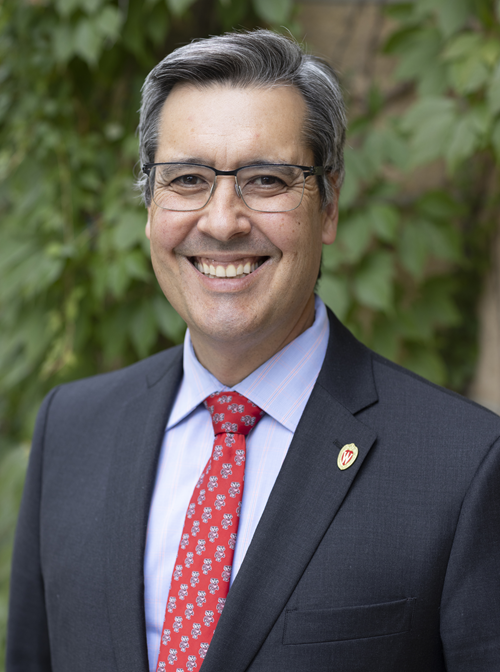
Daniel Tokaji is the Fred W. and Vi Miller Dean and Professor of Law at the University of Wisconsin Law School.
The opinions expressed are those of the author(s) and do not necessarily reflect the views of their employer, its clients, or Portfolio Media Inc., or any of its or their respective affiliates. This article is for general information purposes and is not intended to be and should not be taken as legal advice.
- Rucho v. Common Cause, 588 U.S. 684 (2019).
- Shelby Co. v. Holder, 570 U.S. 529 (2013).
- Brnovich v. DNC, 594 U.S. 647 (2021).
- Wilfred U. Codrington, III, Unprincipled All the Way Down, 81 Wash. & Lee L. Rev. 1087 (2024); Richard L. Hasen, Reining in the Purcell Principle, 43 Fla. St. L. Rev. 427 (2017).
- https://www.supremecourt.gov/opinions/25pdf/24-568_gfbh.pdf.
- Madiba K. Dennie, The Supreme Court Just Made It Easier For Republicans to Challenge Election Rules They Don't Like, Balls and Strikes (Jan. 15, 2026), https://ballsandstrikes.org/scotus/supreme-court-bost-opinion-recap/.
- Ill. Comp. Stat., Ch. 10, § 5/19–8(c).
- https://www.ncsl.org/elections-and-campaigns/table-11-receipt-and-postmark-deadlines-for-absentee-mail-ballots
- 2 U.S.C. § 7.
- 3 U.S.C. § 1.
- Republican Nat'l Committee v. Wetzel, 120 F.4th 200 (5th Cir. 2024).
- Bost v. Illinois St. Bd. of Elections, 114 F.4th 634 (7th Cir. 2024).
- Lujan v. Defenders of Wildlife, 504 U.S. 555, 560 (1992).
- Department of Commerce v. New York, 588 U.S. 752, 767 (2019).
- Allen v. Wright, 468 U.S. 737, 755 (1984).
- Mark D. Rosenbaum & Daniel P. Tokaji, Healing the Blind Goddess: Race and Criminal Justice, 98 Mich L. Rev. 1941, 1966 (2000). One can only wonder whether some instances of police violence toward people of color, amply documented in recent years, might have been avoided if Lyons had come out differently.
- Daniel Tokaji & Owen Wolfe, Baker, Bush, and Ballot Boards: The Federalization of Election Administration, 62 Case. W. Rsrv. L. Rev. 969, 971 (2012).
- Heather K. Gerken, Election Law Exceptionalism? A Bird's Eye View of the Symposium, 82 B.U. L. Rev. 737, 738 (2002).
- 549 U.S. 1 (2006).
- 531 U.S. 1046, 1047 (2000) (Scalia, J., dissenting).
- Va. Coalition for Immigrant Rts. v. Beals, No. 1:24-cv-1807, 2024 U.S. Dist. LEXIS 195908, at 4–6, 2024 WL 4577983 (E.D. Va. Oct. 25, 2024).
- Beals v. Va. Coalition for Immigrant Rts., 220 L. Ed 2d 179 (2024); see also Amy Howe, Supreme Court Allows Virginia to Remove Suspected Non-citizens From Voter Rolls, SCOTUS Blog (Oct. 30, 2024), https://www.scotusblog.com/2024/10/supreme-court-allows-virginia-to-remove-suspected-non-citizens-from-voter-rolls/ (discussing the Court's decision to allow the removal of voters from the rolls).
Submitted by Law School News on January 26, 2026
This article appears in the categories: Faculty, In the Media
Related employee profiles: Dan Tokaji
