24/7 (+5) is an ongoing multimedia series that celebrates the innovative work of UW Law faculty. We asked Professor Alta Charo to explain her latest research in three ways:
- a 24-second video
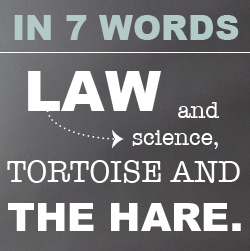
- a 7-word summary
- 5 questions
5 questions for Alta Charo
What research question are you asking?
My current research looks at social and political reactions to the creative powers of 21st century biology, as opposed to its destructive powers. While the 19th century public celebrated the age of invention, the 20th century public decried the destructive power of science. In the 21st century, we watch science create life from off-the-shelf laboratory materials, and we’re exhibiting a fear of creation that mirrors the older fears of destruction. We’re tempted to criminalize the science, but it is by creating life that we come to understand its essence. What roles do our constitution and our culture play in protecting — or inhibiting — scientific discovery?
What are you finding?
I find a surprising lack of scholarly inquiry or legal decision making about whether there is a right to do research, particularly the kind of research that challenges religious doctrines and cherished cultural beliefs about the origins and uniqueness of human life — like synthesizing life.
How have people’s lives been affected by current policy (or lack of it)?
In the area of embryonic stem cell research, for example, the science was proceeding long before there were either voluntary guidelines or state laws to govern the research. I served as co-chair of the National Academies’ committee that drafted voluntary guidelines for embryonic stem cell research. Since then, the research advanced to the point of clinical trials using embryonic stem cells to treat spinal cord injury, certain forms of blindness, and diabetes. While some governors and state legislatures moved to criminalize the research and shut it down completely, others took the guidelines and transformed them into state law that would govern how the research would be conducted and funded. Today synthetic biology, genetic engineering of animals, and gene editing of our human genome have all begun to attract similar attention.
What does your research bring to your classroom?
When I bring these questions into my classroom, students begin to think deeply about the power of science; the meaning of constitutional protections for thought, speech and expressive conduct; the relationship between the state and religion; and the question of whether government can and should legislate on the basis of moral objections.
How will this work improve the lives of citizens in Wisconsin and beyond?
If law and policy promote responsible research in synthetic biology and genetic engineering, we’re promised the chance to eliminate deadly diseases, to design plant and animal life that sustains us at less cost and with less environmental destruction, and to begin unraveling the secret of life.
Learn more:
- "CRISPR Critters and CRISPR Cracks," American Journal of Bioethics, December 2015
- "Fetal Tissue Fallout," New England Journal of Medicine, September 2015
- "Yellow Lights for Emerging Technologies," Science, July 2015
UW Law School's 24/7 (+5) Research Series is adapted from the 24/7 Lecture Series, presented by the Annals of Improbable Research.
Submitted by Tammy Kempfert on December 29, 2015
This article appears in the categories: 24/7 (+5) Research Series
