24/7 (+5) is an ongoing multimedia series that celebrates the innovative work of UW Law faculty. We asked Professor Michele LaVigne to explain her latest research in three ways:
- a 24-second video
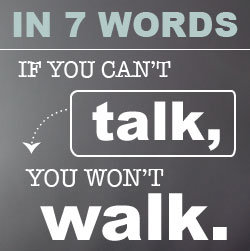
- a 7-word summary
- 5 questions
5 questions for Michele LaVigne
What research question are you asking?
The big question is "what is the connection between language and justice?" More specifically we are asking about individuals who have underdeveloped language skills. What happens to them when they deal with the police? With their lawyers? With courts?
What are you finding?
First and foremost, we are finding that many, many individuals who come into the criminal and juvenile justice system lack genuine oral language competency. They don’t fare well when interrogated, are unable to adequately communicate with their lawyers, don’t comprehend the nature and consequences of the byzantine legal process; and they, themselves, are routinely misunderstood and misinterpreted.
What's the status of current law as it relates to your research?
Technically speaking, the law already has this covered. A fundamental tenet of due process is that an individual must be able to comprehend the legal process and be able to communicate with his or her lawyer. But in general, judges, lawyers and police have no idea how language and communication actually function, and they often don’t realize how opaque our language can be. Judges and lawyers tend to have a rigidly formalistic notion that equates "being told" with comprehending. And they assume that if a person can speak about everyday matters like dinner or work or going fishing, he or she has enough language to navigate the justice system. They are wrong on all counts.
What does your research bring to your classroom?
The importance of communication is front and center, whether I’m teaching a large section of Criminal Procedure or a seminar of public defender interns. We discuss the legal fictions we spin when we think about informing people of their “rights.” Or when we think the numerous rituals we perform in the name of “justice.” The seminar students are more or less locked in the classroom until they understand that talking like a lawyer is not communication, unless you’re talking with other lawyers. Nothing gets the students' attention faster than asking them “so what is a right?” and having them realize that they have no idea how to explain it in human English.
What actions need to be taken to make the system fairer?
Education about language impairments and deficits and their effects is number one. In a perfect world, I would make every lawyer and judge participate in a week-long interactive workshop that deals specifically with language development, language structure and processing, and the true meaning of communication. It is perhaps the ultimate irony (or one of them at least) that, in a profession where the only tool we have is language, practitioners know very little about it.
Learn more:
- "He Got in my Face so I Shot Him: How Defendants' Language Impairments Impair Attorney-Client Relationships" CUNY Law Review, August 2013
- "Breakdown in the Language Zone: The Prevalence of Language Impairments among Juvenile and Adult Offenders and Why it Matters," UC Davis Journal of Juvenile Law and Policy, August 2010
UW Law School's 24/7 (+5) Research Series is adapted from the 24/7 Lecture Series, presented by the Annals of Improbable Research.
Submitted by Law School News on April 24, 2016
This article appears in the categories: 24/7 (+5) Research Series
