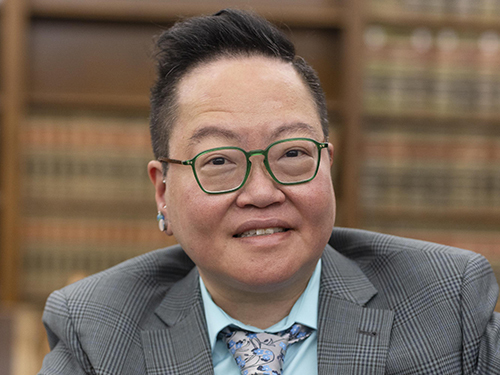
The rich intellectual environment at University of Wisconsin Law School is driven by a faculty of renowned legal scholars and innovative thinkers. They are the thought provokers. The idea generators. The pathbreakers who ask tough questions.
This stellar scholarly tradition makes UW Law the vibrant institution it is today.
Read Our 2025 Brochure
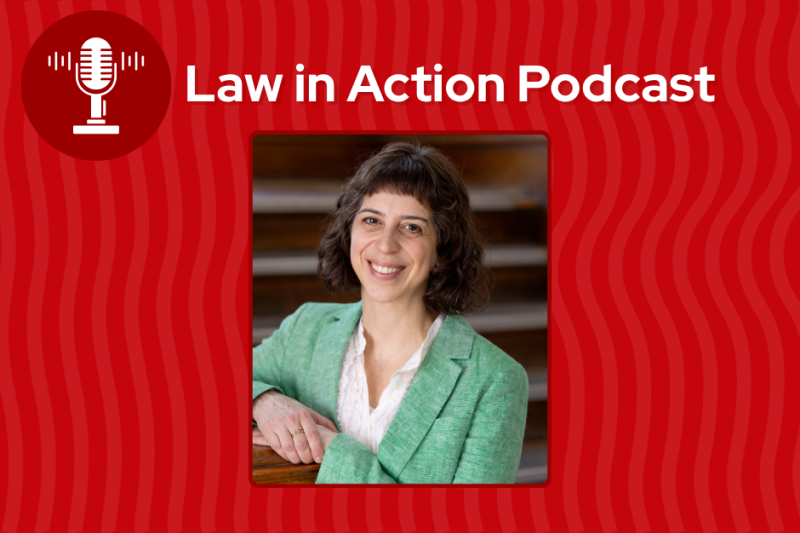
UW Law on Rewriting the Program
As a cornerstone of legal education, legal research and writing has been taught at UW Law School for over a century. Over the past 15 years, what is now known as Legal Analysis, Advocacy, and Writing (LAAW) has evolved into a rigorous, interactive program with an expanded faculty of eight professors, all of whom have significant practice experience. While the program has slowly grown since its first iterations over a century ago, the most significant elevation can be credited to the leadership of two of UW Law’s leaders: Ursula Weigold, who retired this year as associate dean for Experiential Learning, and Margaret Raymond, who stepped down as dean of the Law School in 2020 but continues to teach. Learn more about how UW Law is rewriting the program.
Maryland Adopts Technology from Project Led by BJ Ard
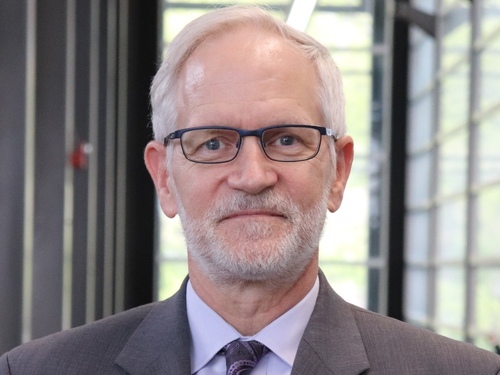
UW Law Professor BJ Ard is a principal investigator on a National Science Foundation-funded project that has achieved a major milestone: Maryland has become the first state to publish its regulations online using cryptographically secure technology that protects against cyberattacks and ensures long-term digital preservation. The state implemented The Archive Framework (TAF), a system designed to make digital legal materials reliable, authentic and permanently accessible. Ard helped lead the project alongside collaborators at NYU Tandon School of Engineering and the Open Law Library. Previously, Maryland’s regulations were available only in difficult-to-use HTML, making it nearly impossible for lawyers, researchers and the public to verify what the law said at specific points in time — an essential need for litigation and compliance. Ard emphasized that trustworthy historical access to law is critical, not merely convenient. By restoring the reliability once provided by print publications, this project sets the stage for broader adoption by states nationwide. Learn more.
Alta Charo Shapes Global Conversations
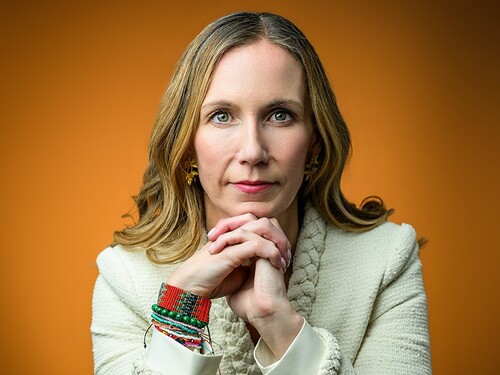
This year, Emerita Professor of Law and Bioethics Alta Charo played a leading role in shaping global conversations at the intersection of bioethics, biotechnology and emerging technologies. She co-authored the "Genome Editing Case Study", part of the Microsoft Office of Responsible AI white paper Learning from Other Domains to Advance AI Evaluation and Testing, and contributed to a Science article calling for a coordinated global approach to ethical oversight of human neural organoid and assembloid research. Charo also authored "If We Could Turn Back Time" in Trends in Genetics, reflecting on scientific responsibility and governance. Internationally, she participated in a joint OECD–WHO meeting in Paris on global governance of emerging technologies. Her speaking engagements included a keynote on equitable global access to gene therapy, leadership of an Asilomar panel on neural organoid ethics, and participation in a biotechnology law panel at the Federalist Society’s annual meeting. Charo was appointed to DARPA’s Biological Sciences and Technology committee, chairing a study group on autonomous biosurveillance, and was selected to serve on Fujifilm’s new Bioethics Advisory Committee.